Introduction
Google Ads and Paid Advertising have become important parts of digital marketing for businesses looking to reach potential customers online. From promoting products on Google Search to showcasing services through YouTube, paid advertising helps businesses connect with people who are interested in what they offer.
Google Ads and Paid Advertising give businesses an opportunity to promote their services and reach people who are interested in their products.
To understand the broader aspects of online promotion, read our complete guide to Digital Marketing, which covers different strategies businesses can use to grow online.
What Is Google Ads?
Google Ads is an online advertising platform developed by Google. It allows businesses to create advertisements and reach potential customers across Google’s advertising network.
Advertisers can select relevant keywords, define their target audience, set budgets and create campaigns based on their marketing objectives.
With Google Ads and Paid Advertising, businesses can choose their target audience, control their advertising budget and monitor campaign performance.
For example, imagine someone owns a website design business in Ernakulam. They can create a Google Search campaign targeting relevant searches such as “website designer in Ernakulam.”
When people search for related terms, the advertisement may appear among the sponsored results, depending on factors such as bid, ad quality and relevance.
For more information about creating and managing advertising campaigns, visit the official Google Ads Help Centre.
What Is Paid Advertising?
Paid advertising is a digital marketing method in which businesses pay platforms to display promotional content to selected audiences.
Unlike organic marketing, which focuses on earning visibility naturally, paid advertising uses an allocated budget to increase exposure.
Some popular paid advertising platforms include:
- Google Ads
- Meta Ads (Facebook and Instagram)
- YouTube Ads
- LinkedIn Ads
- Microsoft Advertising
Each platform offers different targeting options and advertising formats.
Google Ads and Paid Advertising help businesses promote their offerings through different online channels.
Types of Google Ads Campaigns
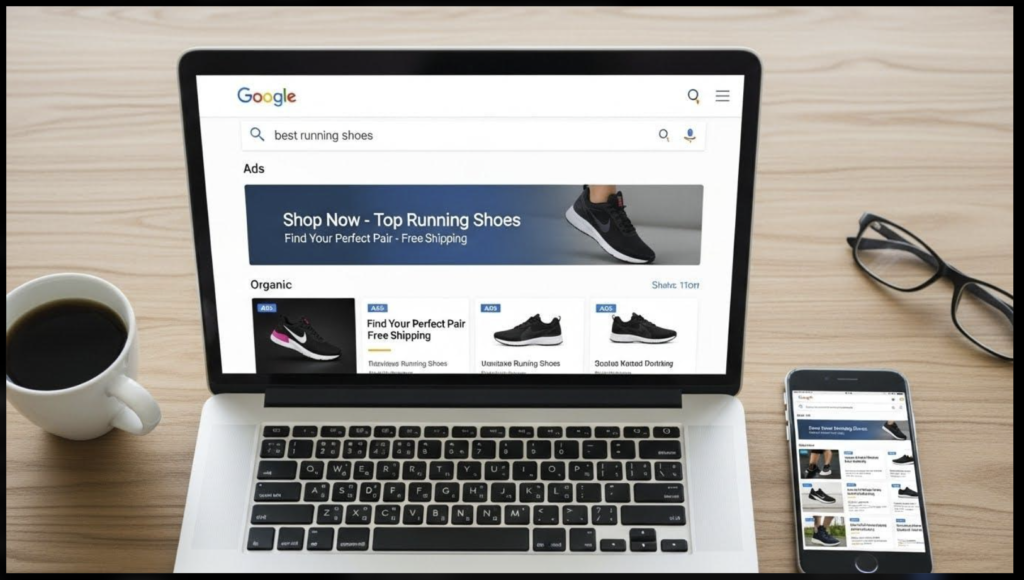
Google Ads provides several campaign options, allowing businesses to choose the right one based on their marketing goals.
Businesses can explore different advertising options and campaign features through the official Google Ads website.
1. Search Ads
Search ads are text-based advertisements that appear on Google search results pages.
For example, when someone searches for “best digital marketing course near me,” relevant sponsored advertisements may appear.
Search campaigns are useful for reaching people who are actively looking for specific products or services.
2. Display Ads
Display advertising uses visual formats such as images and banners to promote products or services across websites and apps within Google’s Display Network.
For example, an online clothing store can use display ads to introduce its latest collection to relevant audiences.
3. Video Ads
Businesses can use video ads on platforms like YouTube to showcase their products, explain their services and connect with potential customers.
4. Shopping Ads
Shopping ads display product information such as images, prices and store details.
They are particularly useful for e-commerce businesses that want to showcase their products to people searching online.
5. Performance Max Campaigns
Performance Max is a goal-based campaign type that helps advertisers reach audiences across multiple Google advertising channels through a single campaign.
It uses Google’s automation and machine learning to optimize campaign performance based on the advertiser’s goals and available data.
How Does Google Ads Work?
Google Ads works through an advertising auction system.
When a person performs a relevant Google search, Google evaluates eligible advertisements to determine which ones can appear and in what order.
Some important factors include:
- Keyword relevance: How closely the advertisement matches the user’s search.
- Bid: The amount a business is prepared to pay for an ad click or other advertising interaction, depending on its bidding strategy.
- Ad quality: The relevance and usefulness of the advertisement and its landing page.
- Expected impact: The expected effect of ad assets and other advertising formats.
A higher bid alone does not guarantee the top advertising position. Google also considers ad quality and other auction-time factors.
Important Google Ads Terms Every Beginner Should Know
Understanding common advertising terms makes campaign management easier.
1. CPC (Cost Per Click)
CPC refers to the amount an advertiser pays for a click on an advertisement.
2. CTR (Click-Through Rate)
CTR measures how often people click an advertisement after seeing it.
Formula:
CTR = (Total Clicks / Total Impressions) × 100
3. Impressions
An impression is counted when an advertisement is shown.
4. Conversion
A conversion is a valuable action completed by a user, such as purchasing a product, submitting a form or making an enquiry.
5. Quality Score
Quality Score is Google’s diagnostic tool for evaluating the quality of Search campaign keywords. It considers expected click-through rate, ad relevance and landing page experience.
6. CPA (Cost Per Acquisition)
CPA measures the average advertising cost associated with obtaining a conversion.
Benefits of Google Ads for Businesses
1. Reaches Potential Customers
Businesses can reach people searching for products or services related to their offerings.
2. Provides Faster Visibility
Unlike SEO, which generally takes time to build organic visibility, paid advertising can generate impressions and clicks soon after a campaign becomes eligible to run.
3. Budget Control
Advertisers can set campaign budgets and manage their spending according to business requirements.
4. Measurable Performance
Google Ads provides reporting data that helps advertisers understand clicks, impressions, costs and conversions.
5. Location Targeting
Businesses can configure location targeting to reach audiences in selected geographical areas.
For example, a local service provider can target potential customers in specific locations around Ernakulam.
One of the main advantages of Google Ads and Paid Advertising is that businesses can reach potential customers based on their interests and search behaviour.
Google Ads vs SEO: What Is the Difference?
Both SEO and Google Ads help businesses gain visibility on search engines, but they work differently.
SEO | Google Ads |
Focuses on organic search visibility | Focuses on paid advertising |
No payment for each organic click | Advertising clicks can incur costs |
Usually takes time to build results | Can generate visibility more quickly |
| Requires ongoing content and website optimization | Requires campaign and budget management |
Organic rankings are not guaranteed | Ad placement depends on auction eligibility and performance |
A business can use both strategies together to improve its overall search visibility.
Unlike organic SEO, Google Ads and Paid Advertising allow businesses to gain visibility through sponsored placements.
Common Google Ads Mistakes to Avoid
Running advertisements without a proper strategy can waste money.
Here are some mistakes beginners should avoid:
- Choosing keywords without researching search intent.
- Sending visitors to an irrelevant landing page.
- Writing advertisements without a clear message.
- Ignoring negative keywords.
- Not tracking conversions.
- Setting a budget without defining campaign goals.
- Making frequent changes without evaluating performance data.
Regular monitoring and testing help advertisers identify what needs improvement.
A clear understanding of Google Ads and Paid Advertising can help beginners avoid unnecessary advertising expenses.
How to Create a Successful Google Ads Campaign
Before launching a campaign, businesses should understand their audience and marketing objectives.
Follow these basic steps:
- Define your campaign objective.
- Research relevant keywords.
- Select the appropriate campaign type.
- Identify your target audience and locations.
- Write clear and relevant advertisements.
- Create a useful landing page.
- Set an appropriate budget and bidding strategy.
- Configure conversion tracking.
- Monitor campaign performance and optimize regularly.
A successful campaign is not simply about getting more clicks. It should attract relevant visitors and encourage meaningful actions.
Is Google Ads Worth It for Small Businesses?
Google Ads can be useful for small businesses that want to reach potential customers through online advertising.
However, success depends on the industry, competition, advertising budget, campaign setup and quality of the website.
For example, a local salon can use Search ads to reach people looking for salon services in its area. An online store can use Shopping campaigns to showcase its products.
Before investing, businesses should identify what they want to achieve and how they will measure success.
Choosing the right Google Ads and Paid Advertising strategy can help businesses make better use of their marketing budget.
Conclusion
Google Ads and paid advertising provide businesses with opportunities to reach relevant audiences, promote their services and generate customer enquiries.
From Search and Display campaigns to Video and Shopping ads, each advertising format serves a different purpose.
However, spending more money does not automatically guarantee better results. Careful planning, relevant advertisements, effective landing pages and proper conversion tracking are essential for making advertising investments worthwhile.
Businesses that combine paid advertising with long-term strategies such as SEO and content marketing can build a more balanced digital marketing approach.
About the Author
Anusree – Freelance Digital Marketer
Anusree is a freelance digital marketer based in Ernakulam, Kerala, interested in SEO, Google Ads, social media marketing and website optimization. She focuses on understanding practical digital marketing techniques that help businesses strengthen their online presence.
Frequently Asked Questions
1. What is Google Ads used for?
Google Ads helps businesses promote products and services through paid advertisements across Google’s advertising network.
2. Is Google Ads free to use?
Creating a Google Ads account is free, but running advertising campaigns requires an advertising budget. Advertisers pay according to their campaign bidding and billing arrangements.
3. What is the difference between Google Ads and paid advertising?
Google Ads is one platform for paid online advertising. Paid advertising is a broader term that includes Google Ads, Meta Ads, LinkedIn Ads and other platforms.
4. How much should a beginner spend on Google Ads?
There is no fixed starting budget for every business. The amount depends on the industry, competition, location and campaign goals.
5. Can Google Ads help small businesses?
Yes. Small businesses can use Google Ads to reach relevant audiences, promote local services and generate enquiries, provided campaigns are planned and monitored properly.