Social media has become an important part of how businesses connect with customers, build trust, and grow online. Whether you run a small business, work as a freelancer, or manage a brand, social media can help you reach the right audience and build meaningful relationships.
In this guide, we’ll explore what social media marketing is, why it is important, how it works, different social media platforms, content strategies, engagement, important metrics, and practical tips for beginners.
Social media marketing is an important part of a broader digital marketing strategy.
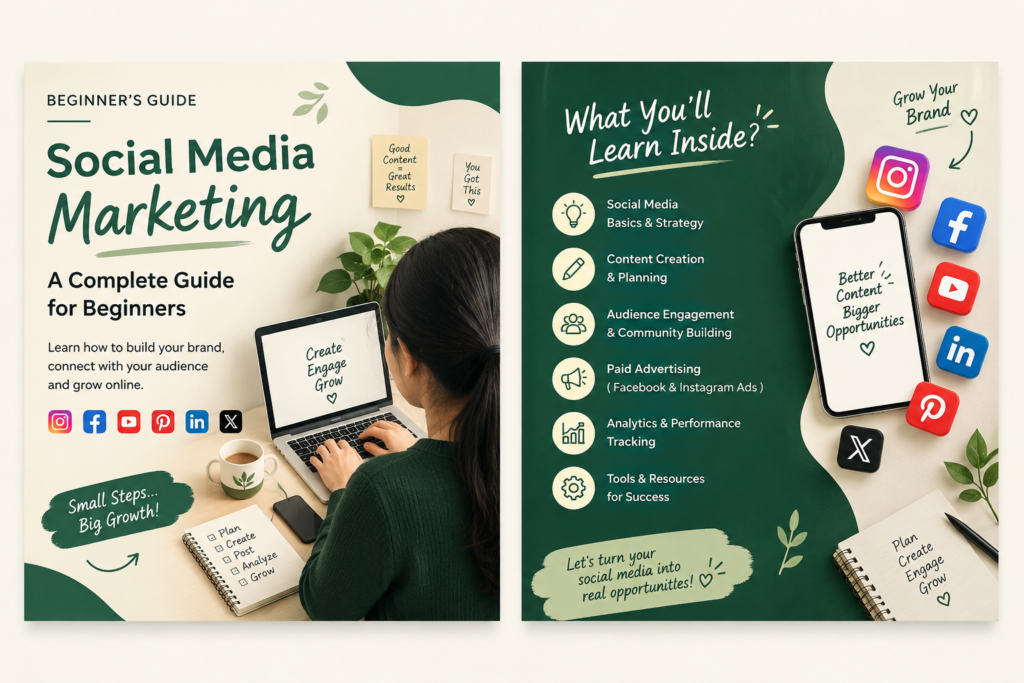
What Is Social Media Marketing?
Social media marketing is the process of using social media platforms to promote a business, connect with customers, build brand awareness, and achieve marketing goals.
It includes creating and sharing useful content, engaging with followers, understanding audience behaviour, and using paid advertising when needed.
Why Is Social Media Marketing Important?
Social media marketing helps businesses reach potential customers where they already spend their time. It can increase brand awareness, build customer relationships, drive website traffic, and support business growth.
For small businesses, social media can also be a cost-effective way to showcase products or services and connect with a local audience.
How Does Social Media Marketing Work?
A successful social media marketing strategy starts with understanding the target audience. A business needs to know who its customers are, what they are interested in, which platforms they use, and what type of content they find useful.
After understanding the audience, businesses can choose suitable social media platforms, create valuable content, maintain a consistent posting schedule, engage with followers, and measure their results.
The goal is not simply to post every day. The focus should be on creating content that is useful, relevant, and connected to the business goals.
Popular Social Media Platforms for Businesses
Different social media platforms attract different types of audiences. Choosing the right platform depends on the target audience, business type, and marketing goals.
Facebook is useful for businesses that want to build a community, share updates, promote products or services, and connect with a wide range of users.
Instagram is highly visual and works well for businesses that can showcase their products, services, creativity, or brand personality through photos, videos, Reels, and Stories.
LinkedIn is mainly focused on professional networking. It can be useful for B2B businesses, professionals, recruiters, freelancers, and companies that want to build professional credibility.
YouTube
YouTube is useful for businesses that can explain their products, services, or topics through video content. Tutorials, reviews, educational videos, and demonstrations can help attract and educate an audience.
Pinterest can be useful for businesses related to fashion, food, home decor, travel, beauty, DIY, and other visually searchable topics.
The best platform is not always the one with the largest number of users. It is the platform where your target audience is most active and where your business can consistently create useful content.
Types of Social Media Marketing
There are different ways businesses can use social media as part of their marketing strategy.
Organic Social Media Marketing
Organic social media marketing involves building an audience and reaching people without directly paying for every interaction.
Examples include regular posts, Stories, Reels, educational content, videos, and community engagement.
Paid Social Media Marketing
Paid social media marketing involves paying social media platforms to show advertisements to a selected audience.
Businesses can use paid advertising to promote products, services, offers, websites, or specific campaigns.
Influencer Marketing
Influencer marketing involves working with content creators or influencers who have an audience that may be interested in a particular product or service.
The success of influencer marketing depends on choosing the right creator and making sure their audience matches the target market.
Social Media Content Marketing
Social media content marketing focuses on creating and sharing useful information that attracts and engages the target audience.
This can include educational posts, videos, guides, tips, customer stories, product information, and behind-the-scenes content.
Types of Social Media Content
Businesses can use different types of content depending on their audience and marketing goals.
Educational Content
Educational content answers questions, explains topics, provides tips, and helps the audience solve problems.
Promotional Content
Promotional content highlights products, services, offers, discounts, launches, or special announcements.
Entertainment Content
Entertainment content is created to make people interested, engaged, or emotionally connected with a brand.
User-Generated Content
User-generated content is content created by customers or followers about a business or its products.
Reviews, testimonials, photos, and videos are common examples.
Behind-the-Scenes Content
Behind-the-scenes content shows the people, process, workplace, or daily activities behind a business.
It can make a brand feel more personal and authentic.
What Is a Social Media Content Strategy?
A social media content strategy is a plan for deciding what content to create, who it is for, which platforms to use, and what goals the content should achieve.
Keyword research can also help you understand what people are searching for and choose relevant content topics.
A simple social media content strategy can include:
- Understanding the target audience
- Setting clear social media goals
- Choosing the right platforms
- Planning content topics
- Creating different content formats
- Maintaining a consistent posting schedule
- Monitoring performance
- Improving the strategy based on results
A good strategy should focus on the audience rather than only promoting the business.
What Is a Social Media Content Calendar?
A social media content calendar is a simple plan that helps businesses organize their social media posts.
It can include the date, platform, content topic, content format, caption, visual, and publishing status.
For example, a small business might plan educational content on Monday, a product post on Wednesday, and a customer testimonial on Friday.
A content calendar can save time, reduce last-minute planning, and make it easier to maintain consistency.
What Is Social Media Engagement?
Social media engagement refers to the interactions people have with your content.
Common forms of social media engagement include:
- Likes
- Comments
- Shares
- Saves
- Replies
- Mentions
- Direct messages
Engagement is important because it shows how people are responding to your content.
However, high engagement alone does not always mean a campaign is successful. The results should also be connected to the overall business goal.
What Are Social Media Hashtags?
Hashtags are words or phrases preceded by the # symbol. They can help categorize content and make it easier for people to discover posts related to a particular topic.
For example, a digital marketer might use hashtags related to digital marketing, SEO, social media marketing, or small business marketing.
Hashtags should be relevant to the content. Using too many unrelated hashtags may not provide meaningful results.
Social Media Marketing and SEO
Social media marketing and SEO are different digital marketing activities, but they can support each other.
Social media can help content reach a wider audience, increase brand visibility, and bring visitors to a website.
When people discover and share useful content through social media, it can also help increase awareness of the brand.
For example, a business can create an informative blog post, share it on social media, and use social media content to encourage people to visit the website.
Important Social Media Marketing Metrics
Measuring performance helps businesses understand whether their social media activities are achieving their goals.
Reach
Reach shows the number of unique people who saw your content.
Impressions
Impressions represent the number of times your content was displayed.
Engagement Rate
Engagement rate helps measure how actively people interact with your content compared with the number of people who saw it.
Follower Growth
Follower growth shows how your social media audience is increasing or decreasing over time.
Website Traffic
Website traffic helps businesses understand how many visitors are coming to their website through social media.
Conversion
Conversions are actions that support a business goal, such as making a purchase, submitting a form, booking a service, or signing up for something.
The most important metric depends on the goal of the campaign. For example, a brand awareness campaign may focus more on reach and impressions, while a sales campaign may focus more on conversions.
Social Media Marketing Best Practices
Create Useful Content
Try to create content that helps, educates, informs, or entertains your audience instead of only promoting your products or services.
Know Your Audience
Understand your audience’s interests, problems, preferences, and behaviour. This helps you create content that feels relevant to them.
Be Consistent
Consistency is more important than posting a large amount of content for a short period.
Create a realistic schedule that you can maintain over time.
Use Visual Content
Images, short videos, Reels, carousels, and other visual formats can make social media content more engaging and easier to understand.
Respond to Your Audience
Reply to comments and messages when appropriate. Social media is not only about publishing content; it is also about building relationships.
Use Analytics
Regularly check your social media insights and analytics. Identify what works well and improve the content that is not performing as expected.
Avoid Copying Competitors
It is useful to study competitors, but your content should have its own voice, ideas, and value.
Common Social Media Marketing Mistakes
Posting Without a Strategy
Posting randomly without a clear goal can make social media activity less effective.
Focusing Only on Selling
If every post is promotional, people may lose interest. Try to provide useful and engaging content along with promotional posts
Ignoring Comments and Messages
Not responding to your audience can make the brand feel less approachable.
Using the Same Content Everywhere
Different platforms have different audiences and content formats. Content may need to be adapted for each platform.
Ignoring Analytics
Without checking performance, it is difficult to understand what is working and what needs improvement.
Expecting Instant Results
Social media marketing usually takes time. Building trust, an audience, and consistent engagement requires patience and regular effort.
Social Media Marketing for Small Businesses
Social media can be especially useful for small businesses because it provides opportunities to build visibility and communicate directly with customers.
A small business does not necessarily need to be active on every platform. It can start with one or two platforms where its target audience is most active.
For example, a local bakery might use Instagram to showcase products, share customer photos, announce special offers, and communicate with nearby customers.
The key is to focus on useful content, consistency, genuine communication, and understanding what the audience wants.
How to Create a Simple Social Media Marketing Strategy
If you are a beginner, you can start with these simple steps.
Step 1: Define Your Goal
Decide what you want to achieve. Your goal could be increasing brand awareness, getting website traffic, generating leads, increasing sales, or building a community.
Step 2: Identify Your Target Audience
Understand who you want to reach. Consider their age, interests, location, needs, and online behaviour.
Step 3: Choose the Right Platforms
Select platforms that match your audience and business type. You do not need to be active on every social media platform.
Step 4: Plan Your Content
Create a list of useful topics and decide what type of content you will publish.
Step 5: Create and Publish Consistently
Create quality content and follow a realistic publishing schedule.
Step 6: Engage With Your Audience
Respond to comments, messages, questions, and feedback. This helps build relationships with your audience.
Step 7: Measure Your Results
Check important metrics regularly and identify which content performs well.
Step 8: Improve Your Strategy
Use your results to understand what your audience likes and make changes to your future content.
Final Thoughts
Social media marketing is more than simply posting pictures or promoting products. It is about understanding your audience, creating useful content, building relationships, and using data to improve your results.
For beginners and small businesses, the best approach is to start with a clear goal, choose the right platforms, stay consistent, and focus on providing value.
With the right strategy and regular effort, social media can become an important part of a business’s overall digital marketing strategy.
Author
Anusree Suresh is a digital marketing learner and aspiring freelance digital marketer with a focus on SEO, social media marketing, and helping businesses build their online presence.