Table of Contents
ToggleSEO for Beginners: A Complete Guide to Improving Your Website’s Visibility
Introduction
If you’re new to digital marketing, SEO is one of the most important concepts to understand. Search Engine Optimization (SEO) helps your website appear more prominently in search engine results when people search for products, services, or information related to your business.
SEO is not just about adding keywords to a website. It involves creating useful content, improving your website structure, making pages easy for search engines to understand, and providing a good experience for visitors. When done consistently, SEO can help you attract relevant organic traffic without depending entirely on paid advertising.
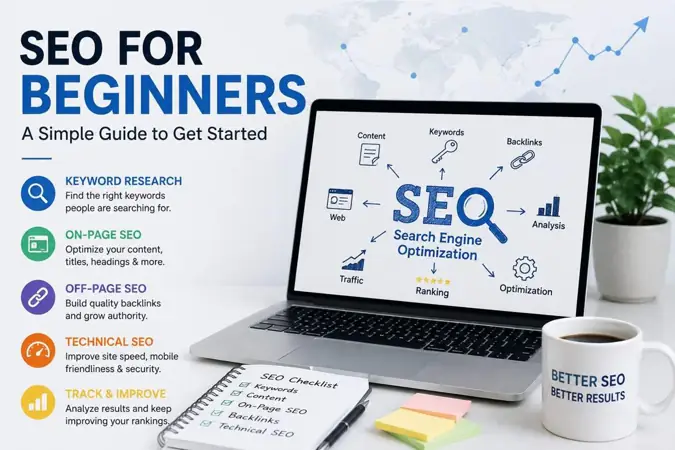
In this beginner-friendly guide, you’ll learn the basics of SEO, including keyword research, on-page SEO, technical SEO, off-page SEO, and simple strategies you can use to improve your website’s visibility.
What Is SEO?
SEO stands for Search Engine Optimization. It is the process of improving a website so that search engines can better understand its content and show it to people searching for relevant information.
For example, if you offer digital marketing services in Ernakulam, you may want your website to appear when someone searches for terms such as “digital marketing services in Ernakulam” or “freelance digital marketer in Ernakulam.”
SEO helps connect your website with people who are already looking for what you offer.
SEO stands for Search Engine Optimization. It is the process of improving a website so that search engines can better understand its content and show it to people searching for relevant information.
For example, if you offer digital marketing services in Ernakulam, you may want your website to appear when someone searches for terms such as “digital marketing services in Ernakulam” or “freelance digital marketer in Ernakulam.”
SEO helps connect your website with people who are already looking for what you offer.
A strong online presence can help businesses reach potential customers at the right time. SEO supports this by helping your website gain visibility in organic search results.
Some key benefits of SEO include:
- More organic traffic: SEO can bring visitors to your website without paying for every click.
- Better online visibility: Higher search visibility can help more people discover your business.
- Relevant audience: Targeting the right keywords helps attract people who are interested in your products or services.
- Long-term value: Quality SEO work can continue generating traffic over time.
- Better user experience: Good SEO often involves improving website speed, navigation, readability, and mobile usability.
- Greater credibility: Websites that consistently provide useful and trustworthy information can build stronger relationships with visitors.
How Does SEO Work?
Search engines use automated systems to discover, understand, and organize content available on the web. When someone performs a search, the search engine tries to provide the most relevant and useful results.
Your website’s content, technical setup, relevance, authority, and overall user experience can influence how search engines understand and evaluate your pages.
This is why SEO requires more than simply repeating a keyword. Your content should answer the user’s search intent and provide genuine value.
Types of SEO
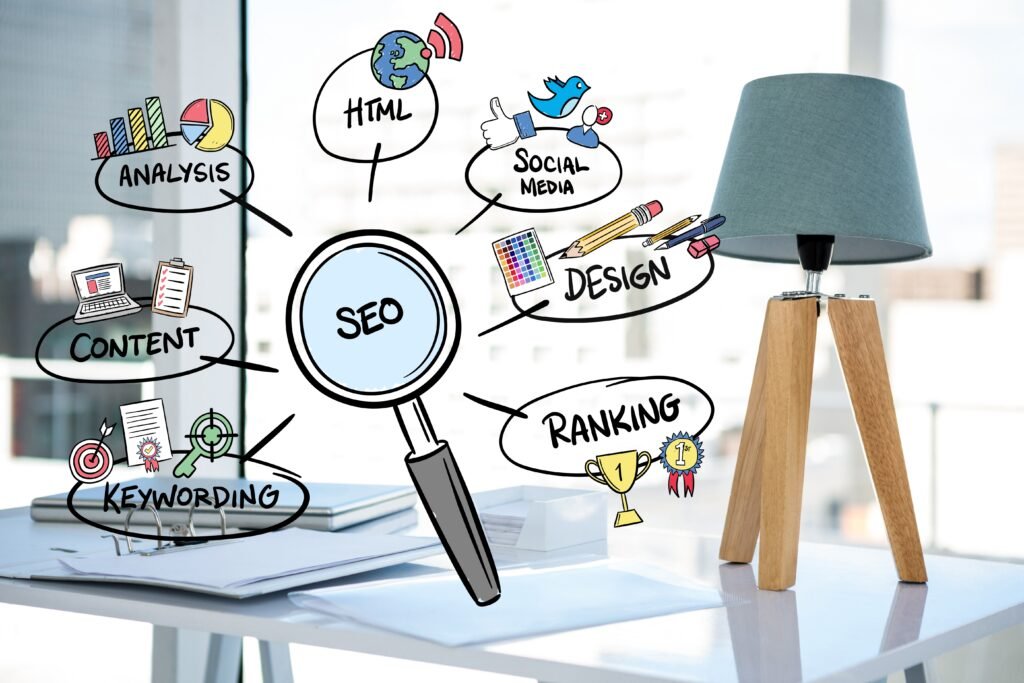
SEO can be broadly divided into three important areas: on-page SEO, off-page SEO, and technical SEO.
1. On-Page SEO
On-page SEO focuses on elements that you can improve directly on your website.
This includes:
- Using relevant keywords naturally
- Creating useful and well-structured content
- Optimizing page titles and headings
- Writing descriptive meta descriptions
- Optimizing image alt text
- Using clear URLs
- Adding internal links
- Organizing content with proper headings
The goal is to make your content useful for both visitors and search engines.
2. Off-Page SEO
Off-page SEO involves activities outside your website that can help build its reputation and authority.
One of the most well-known aspects of off-page SEO is earning quality backlinks from relevant and trustworthy websites.
Other activities can include digital PR, brand mentions, local citations, and building your business presence across relevant online platforms.
The focus should always be on earning genuine visibility rather than creating large numbers of low-quality links.
3. Technical SEO
Technical SEO focuses on improving the technical aspects of your website so search engines can crawl, understand, and index your pages effectively.
Important areas include:
- Website speed
- Mobile responsiveness
- HTTPS security
- XML sitemap
- Crawlability
- Indexing
- Proper website structure
- Core Web Vitals
- Broken links and redirects
A technically healthy website provides a stronger foundation for your SEO efforts.
What Is Keyword Research?
Keyword research is the process of finding the words and phrases people use when searching online.
For example, someone looking for SEO help might search for:
- SEO for beginners
- What is SEO?
- SEO tips for small businesses
- How to improve Google rankings
- SEO services in Ernakulam
The goal is not to choose keywords simply because they have high search volume. You should also consider search intent, competition, relevance, and whether the keyword matches your audience.
On-Page SEO Basics for Beginners
Once you choose your target keyword, use it naturally throughout your page.
Important areas to optimize include:
SEO Title
Create a clear title that tells users and search engines what the page is about.
Headings
Use H1 for the main page heading and H2 and H3 headings to organize different sections.
Content
Write useful content that answers the reader’s questions. Avoid keyword stuffing because excessive repetition can make content difficult to read.
Images
Use relevant images and write descriptive alt text that explains what each image represents.
Internal Links
Link related pages together. For example, this SEO guide can link back to your main Digital Marketing pillar page and to other relevant cluster pages.
URL
Keep your URL short, readable, and relevant to the topic.
Off-Page SEO Basics
Building authority takes time. Instead of trying to get as many backlinks as possible, focus on earning links from websites that are relevant and trustworthy.
Some legitimate approaches include:
- Creating useful original content
- Publishing helpful guides
- Digital PR
- Building relationships within your industry
- Getting listed in relevant business directories
- Promoting valuable resources
Quality matters more than quantity when it comes to building your website’s reputation.
Technical SEO Basics
Technical SEO may sound complicated, but beginners can start with a few basic areas.
Make sure your website:
- Works well on mobile devices
- Loads quickly
- Uses HTTPS
- Has a clear navigation structure
- Has an XML sitemap
- Does not contain unnecessary broken links
- Can be crawled and indexed by search engines
- Provides a good experience for visitors
You can use tools such as Google Search Console and PageSpeed Insights to monitor important website performance and search-related issues.
Common SEO Mistakes Beginners Should Avoid
SEO takes consistency, so avoid shortcuts that can harm your website in the long run.
Keyword Stuffing
Repeating the same keyword excessively can make your content unnatural. Use keywords where they genuinely fit.
Creating Thin Content
Pages with very little useful information may not provide enough value to visitors. Focus on answering the topic thoroughly.
Ignoring Search Intent
Before creating content, understand what the user actually wants to find.
Buying Low-Quality Backlinks
Large numbers of irrelevant or manipulative links can create problems. Focus on genuine, relevant opportunities.
Ignoring Mobile Users
A website should work properly across different screen sizes because many users access websites from mobile devices.
Forgetting Internal Links
Internal linking helps users discover related content and helps search engines understand the relationship between pages.
7 Simple SEO Tips for Beginners
If you’re just starting, focus on these basic practices:
- Choose relevant keywords based on your audience and topic.
- Create helpful content that answers real questions.
- Optimize your titles and headings so the topic is clear.
- Improve website speed and mobile usability.
- Add relevant internal links between related pages.
- Build quality backlinks naturally through useful content and genuine outreach.
- Track your performance using tools such as Google Search Console and analytics platforms.
Remember, SEO is a long-term process. You may not see major results immediately, but consistent improvements can make a significant difference over time.
SEO Tools Beginners Can Use
A few useful tools can make SEO research and monitoring easier.
Google Search Console helps you understand how your website appears in Google Search and can highlight indexing and performance-related information.
Google Analytics can help you understand website traffic and visitor behavior.
Google Keyword Planner can help with keyword research and search-demand insights.
PageSpeed Insights can help you evaluate website performance and identify opportunities to improve loading experience.
You don’t need to use every SEO tool available. Start with a few reliable tools and learn how to use them properly.
Beginners can learn more about SEO best practices from the Google SEO Starter Guide.
Frequently Asked Questions
SEO can seem complicated at first, but the basics are easy to learn. Start with keyword research, useful content, on-page optimization, technical basics, and internal linking.
SEO usually takes time. Results can vary depending on competition, website authority, content quality, technical issues, and the consistency of your SEO efforts.
SEO and Google Ads serve different purposes. SEO can help build long-term organic visibility, while Google Ads can provide faster paid visibility. Many businesses use both as part of their digital marketing strategy.
Yes. Beginners can handle many basic SEO tasks themselves. As your website grows, you may choose to work with an SEO professional for more advanced strategies.
SEO is mainly associated with search engines such as Google and Bing, but the broader goal is to make your content easier to discover and understand through search.
Conclusion
SEO is an important part of building a strong online presence. You don’t need to master everything at once. Start with the fundamentals: understand your audience, research relevant keywords, create useful content, optimize your pages, improve your website’s technical health, and build genuine authority over time.
If you’re building a business website, SEO should work alongside other digital marketing activities such as social media marketing, Google Ads, and content marketing.
For a broader understanding of how these strategies work together, explore our Digital Marketing: 7 Powerful Strategies for Business Growth guide.
Ready to improve your online presence? Get in touch to discuss a digital marketing strategy for your business.